How to pack a picnic for a short walk without carrying a cooler
· Editorial team atlantanewsdaily24.com
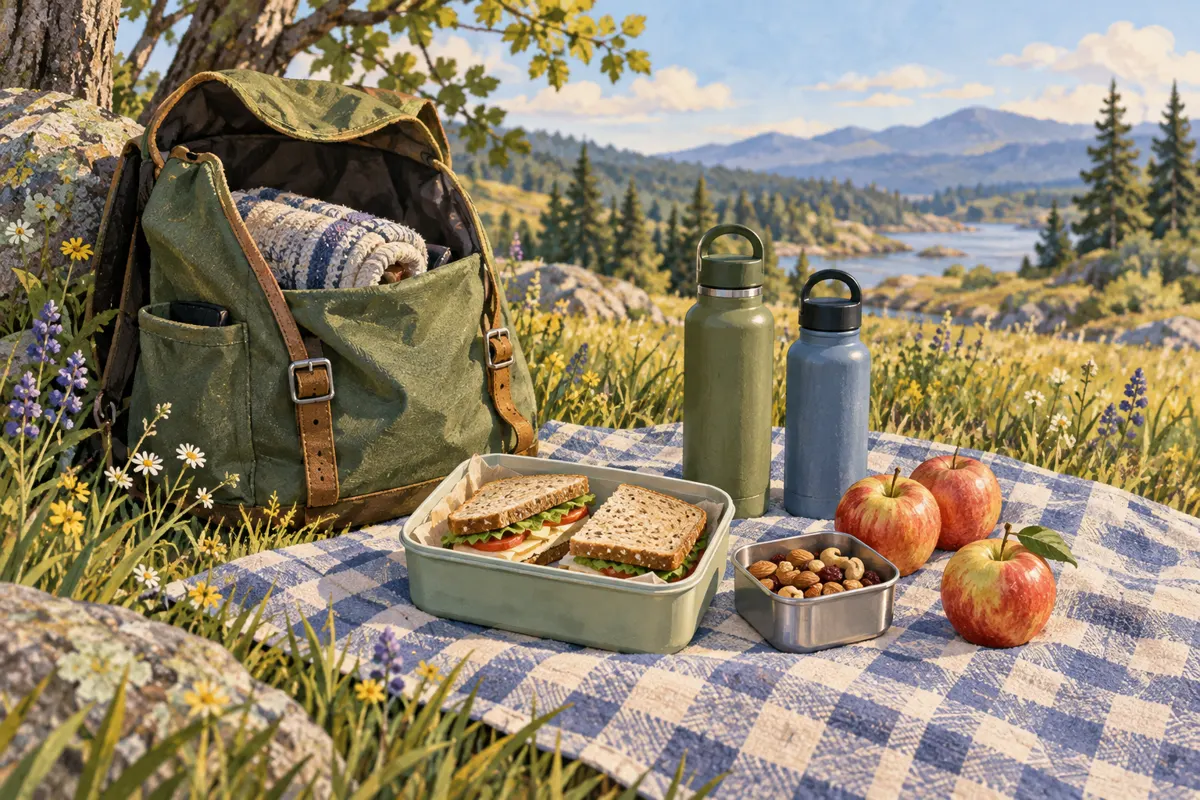
For a short walking picnic without a cooler, pack foods that do not require refrigeration, water in reusable bottles and a few serving essentials. Build lunch around bread or crackers, a suitable shelf-stable spread, whole fruit and nuts. Carry everything in a backpack, protect crushable food in containers and bring a bag for scraps and dirty items.
Choose food that can travel without chilling
Food that tastes good cold is not necessarily food that can travel without refrigeration. The supplied picnic guides include wraps, salads and sandwich fillings intended for chilled transport. For this outing, choose ingredients whose storage instructions allow you to carry them without cooling. Check labels, including any directions that apply after opening.
Leave refrigerated meat, cheese, hummus and prepared salads for a picnic with suitable cooling. A short walk does not change their storage requirements. Keeping the menu simple also reduces the number of containers, utensils and loose ingredients you have to carry.
- Bread, rolls, tortillas or crackers for the main part of lunch.
- A nut or seed butter suitable for unrefrigerated storage, chosen around both diners’ allergies.
- Washed whole apples or oranges rather than a prepared fruit salad.
- Nuts, seeds or dried fruit in a small reusable container.
- Plain cookies or another treat without a coating that melts easily.
Build one compact lunch for two
Our proposed menu is two nut or seed butter sandwiches, two whole apples, a shared container of nuts and dried fruit, and a small portion of plain cookies. Bring water for each person. Adjust the amount to your appetites and the length of the outing; the aim is a satisfying lunch that fits comfortably beside your walking essentials.
Prepare the sandwiches at home if the ingredients’ storage instructions permit it, then put them in a rigid container. Alternatively, take bread and a small amount of suitable spread separately, with a reusable spreading utensil. Separate components give you more work at the lunch stop, so choose the approach you will actually enjoy.
Wash whole fruit before leaving and keep it protected from dirty equipment. Avoid adding several side dishes simply for variety. One main item, one fruit and one shared snack make an easy starting point, with dessert optional.
Pack the backpack in a useful order
A backpack leaves your hands free during the walk. The following packing order is an editorial proposal: it keeps lunch protected and puts the items you need first within reach. Check bottle lids and container closures before loading the bag.
- Place a folded lightweight sitting cloth at the bottom, unless you expect to need it during the walk.
- Position heavier, sturdy containers close to your back. Keep their hard edges from pressing directly against you.
- Carry water bottles upright in secure side pockets, or snugly inside the backpack.
- Put sandwiches, fruit and other crushable food above heavier items, using rigid containers where helpful.
- Keep napkins, the rubbish bag and hand-cleaning supplies in an accessible pocket.
- Try the loaded backpack on and adjust anything that shifts or digs into your back.
Bring only the serving essentials you will use
Choose equipment to match the meal. Sandwiches and whole fruit require little tableware, while assembling food at the stop needs a spreading utensil and a clean surface. A reusable food container can also hold shared snacks during lunch.
- Two reusable water bottles.
- Two cloth napkins.
- One lightweight sitting cloth or wipeable ground covering.
- Reusable utensils only if the menu needs them.
- Hand-cleaning supplies and a small cloth for spills.
- A bag for rubbish and a separate washable bag for dirty utensils or napkins.
Make the pack-out part of lunch
Keep your rubbish bag accessible while eating so wrappers and scraps do not scatter. Before continuing the walk, close containers and separate dirty items from remaining food. Take everything you brought back with you, including fruit cores and peels.
- Collect food scraps, wrappers and any small pieces of packaging.
- Seal remaining food and follow its storage instructions.
- Pack utensils and used napkins in the designated bag.
- Check beneath the sitting cloth and around your bags.
- Secure bottles and containers before putting the backpack on.