How to host a cookbook club with one recipe per guest
· Editorial team atlantanewsdaily24.com
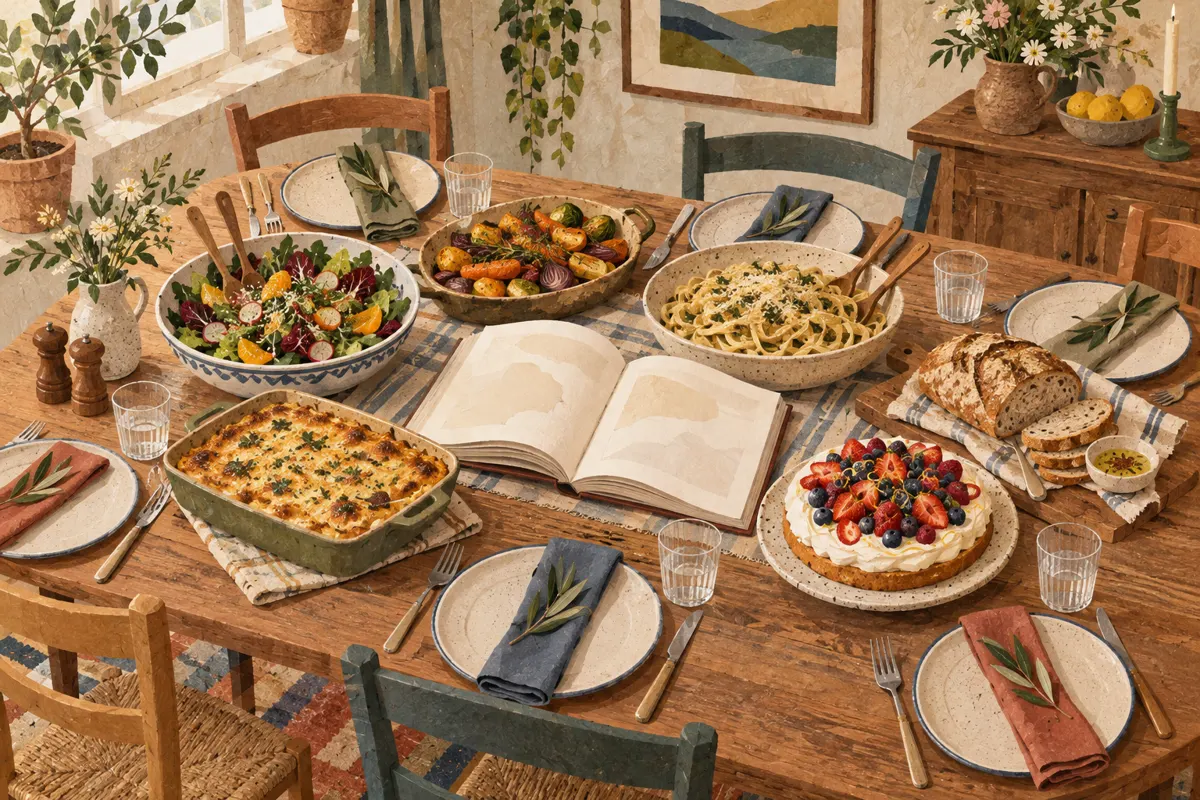
To host a cookbook club, choose one cookbook, agree on a date, and have each person—including the host—claim one recipe. Cook most of the food before the gathering, share the dishes, and talk about how the recipes worked. A shared signup list keeps the meal balanced and makes the preparation easier to coordinate.
Choose a book everyone can use
Start with the people and the date, then settle on the cookbook. Ask which books guests already own or would enjoy exploring. A familiar favorite, a book about a particular cuisine, or a baking collection can all give the gathering a clear focus. Make sure everyone can access their chosen recipe before committing to the menu.
For a first gathering, our proposal is four to six people and a book with a mix of mains, vegetables, and desserts. That gives everyone a distinct contribution without requiring a large table. If the group chooses a dessert book, frame the event as an afternoon tasting so nobody expects a full dinner.
- The cookbook title, author, and edition, if relevant.
- The date, address, arrival time, and planned eating time.
- The request to bring one recipe per person.
- A request for dietary restrictions before dishes are selected.
Give every recipe a place on the menu
Use one shared document or a single group message to record recipe choices. Include each cook’s name, recipe title, page number, dish category, recipe yield, and any finishing needs. Guests can choose freely, but the host should check the overall menu before everyone starts shopping.
Having the host make the main course can simplify transport and timing. Guests can claim appetizers, sides, or dessert. Keep the one-recipe rule manageable: check whether a dish also requires a separate sauce or accompaniment from elsewhere in the book, and agree on who will make it.
Our proposed menu for six cooks is one main, three complementary sides, one appetizer, and one dessert. Treat that as a starting point and adjust it to the book. Compare recipe yields with the guest count before doubling anything; everyone will be tasting several dishes. Discuss dietary needs directly, and record ingredient substitutions so guests know what is being served.
Plan the cooking and finishing work
Decide whether people will arrive with prepared food or cook together. For a straightforward first meeting, ask guests to do most of the cooking at home. Read each recipe through in advance, including resting, chilling, or marinating instructions, so a hidden preparation step does not derail the evening.
- Ask each guest whether their dish needs oven space, a burner, refrigeration, or last-minute assembly.
- Resolve competing kitchen needs ahead of time, especially dishes requiring different oven temperatures.
- Ask cooks to bring an appropriate serving dish and utensil.
- Prepare your own ingredients and clear a counter for arriving food.
- Confirm any recipe changes in the shared signup list.
If several recipes need substantial cooking at your home, revise the selections or explicitly make it a cooking session. Guests should know whether they are arriving to eat soon or to spend time preparing the meal together.
Set up for sharing and conversation
Leave room for the food. A clear table or serving counter, enough seats, plates, napkins, and utensils will do more for the evening than elaborate decorations. Have trivets ready for hot dishes and offer water and a nonalcoholic drink option. Keep the cookbook nearby for reference.
Once everyone is seated, invite each cook to briefly introduce their dish and mention any substitutions. Keep the discussion curious and practical. These proposed prompts give everyone something useful to contribute without turning dinner into a formal review:
- Which instruction needed the most thought?
- Did you substitute anything, and how did it affect the dish?
- What would you prepare ahead next time?
- Would you make this recipe again, and for what occasion?
Finish with leftovers and a next date
Ask guests to bring containers if they would like leftovers, or have spare containers available. Before packing food away, give everyone a chance to note favorite recipe titles and page numbers. A short shared note about substitutions or preparation challenges can help anyone who wants to cook the dishes later.
If the group wants another meeting, choose the next date while everyone is together. You can also propose rotating hosts and letting the next host suggest a cookbook. Keep the same simple arrangement: one book, one recipe per person, and a menu agreed on before cooking begins.